
NIST CSF 2.0 – Protect Function Deep Dive: Platform Security (PR.PS)
Most organizations don’t get breached because they chose the wrong cloud provider, operating system, or endpoint platform.
They get breached because those platforms were not securely configured, maintained, or governed over time.
Platform Security (PR.PS) exists because attackers don’t usually defeat technology—they exploit neglect:
- Unpatched systems
- Misconfigurations
- Unsupported platforms
- Inconsistent security baselines
PR.PS is where cybersecurity discipline shows up every day, long after the architecture diagrams are finished.
How PR.PS Fits Into the Protect Function
So far in the Protect function:
- PR.AA answered who can access systems
- PR.AT addressed how people behave
- PR.DS focused on what data is truly at risk
PR.PS answers the next critical question:
Are the platforms we depend on actually secure by design and by default?
“Platforms” include:
- Servers (on-prem and cloud)
- Endpoints
- Operating systems
- Containers
- Virtual machines
- Cloud services
- Core infrastructure components
If it runs workloads or supports business operations, PR.PS applies.
Beginner Callout: What “Platform Security” Really Means
Platform security is not a single tool or product.
It means:
- Systems are hardened before use
- Secure configurations are consistent
- Vulnerabilities are addressed predictably
- Unsupported technology is minimized
- Drift is detected and corrected
Think of platforms like vehicles:
- Buying a safe car matters
- Maintaining it over time matters more
Why Platform Security Matters to Executives
From an executive and board perspective, platform security directly impacts:
- Breach likelihood
- Ransomware exposure
- Operational resilience
- Regulatory findings
- Cyber insurance outcomes
Many high-impact incidents start with something simple:
- A missed patch
- A default setting
- An outdated system still “temporarily” in use
PR.PS is about preventing avoidable failures, not chasing advanced threats.
Common PR.PS Failures (Even in Mature Organizations)
1. Inconsistent Baselines
When platforms are:
- Built differently across teams
- Patched on different schedules
- Configured inconsistently
Security becomes unpredictable and difficult to defend.
2. Patch Management Without Prioritization
Trying to patch everything immediately usually means:
- Teams get overwhelmed
- Critical systems wait
- Risk is poorly managed
PR.PS is about risk-based prioritization, not panic.
3. Allowing “Temporary” Exceptions to Become Permanent
Unsupported operating systems
Legacy applications
Special configurations
These often stay far longer than planned—and quietly accumulate risk.
How to Implement PR.PS in a Practical, Understandable Way
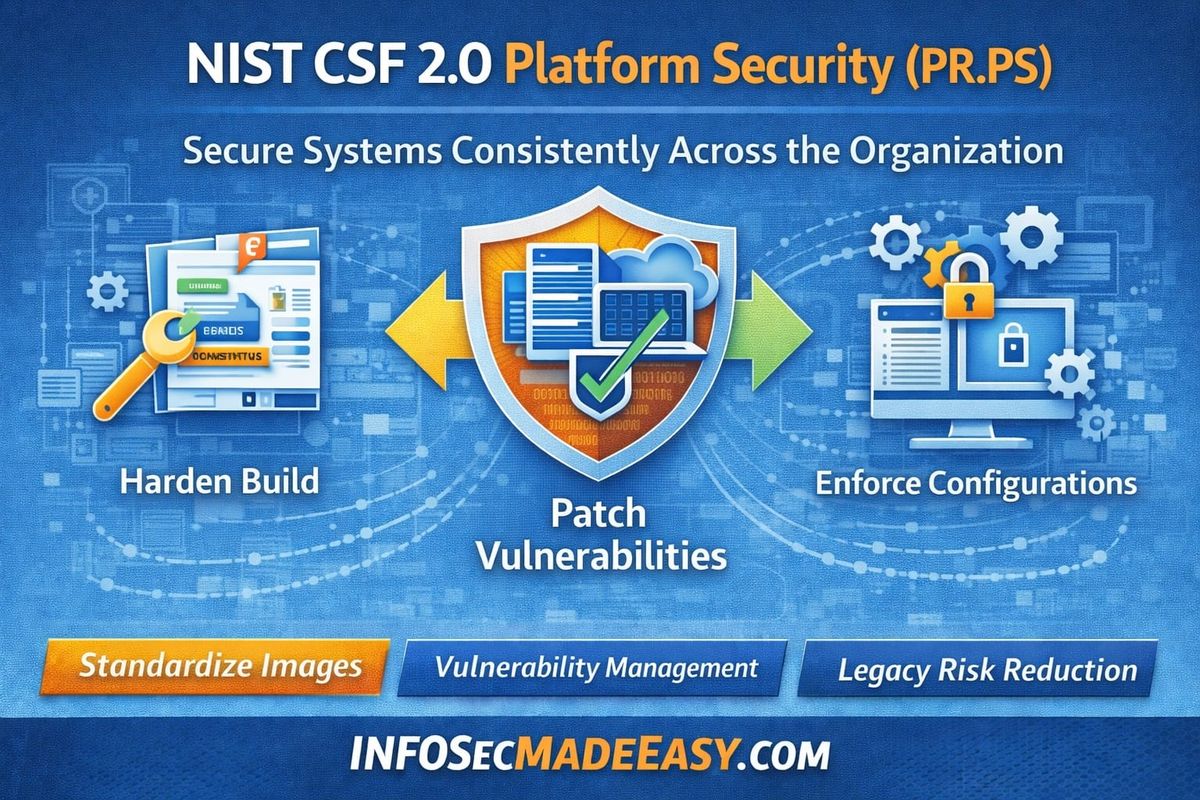
1. Define What “Secure by Default” Means for Your Organization
At minimum, organizations should define:
- Approved platforms
- Required security configurations
- Baseline hardening standards
- Minimum patch levels
This turns security from a judgment call into a repeatable process.
2. Standardize Platform Builds Wherever Possible
Standard images and configurations:
- Reduce errors
- Speed deployment
- Simplify monitoring
- Improve incident response
Customization should be the exception—not the norm.
3. Treat Vulnerability Management as a Business Process
Effective PR.PS programs:
- Prioritize vulnerabilities based on impact and exposure
- Consider asset criticality
- Track remediation timelines
- Escalate risk-based exceptions
Patching without context wastes effort.
Context without action increases risk.
4. Address Platform Drift Continuously
Over time, platforms change:
- Configurations drift
- Security settings are altered
- Controls are disabled to “fix” problems
PR.PS maturity includes:
- Configuration monitoring
- Drift detection
- Automated remediation where possible
5. Reduce Dependency on Unsupported Platforms
Unsupported platforms:
- Don’t receive security updates
- Increase operational fragility
- Raise audit and regulatory risk
Every unsupported system should have:
- A documented owner
- An approved exception
- A retirement or remediation plan
Real-World Executive Example
Two organizations are hit with the same ransomware campaign.
- Organization A had standardized builds, timely patching, and restricted admin access → limited spread
- Organization B had inconsistent platforms, legacy systems, and broad privileges → full environment impact
Same threat.
Different outcomes.
That difference is PR.PS maturity.
Metrics That Make Platform Security Visible
Foundational Metrics
- % of platforms meeting baseline standards
- % of systems on supported software versions
- Patch compliance rates by severity
- Number of unauthorized configurations detected
These demonstrate operational control.
Risk-Focused Metrics
- Exposure time for critical vulnerabilities
- High-risk platforms with approved exceptions
- Repeated configuration drift events
- Platform-related incident root causes
These show whether risk is being reduced over time.
CISO Takeaways
For new and aspiring CISOs:
- Most attacks exploit known weaknesses
- Platform hygiene prevents entire classes of incidents
- Consistency matters more than perfection
- Legacy risk always becomes leadership risk
PR.PS is not glamorous—but it is foundational.
When platform security is strong:
- Incident response is easier
- Impact is reduced
- Confidence increases at the executive level
What “Good” Looks Like
A strong PR.PS capability means:
- Platforms are built securely from the start
- Vulnerabilities are prioritized realistically
- Unsupported systems are tracked and managed
- Configuration drift is detected early
- Security expectations are clear and enforceable
For beginners, this creates clarity.
For executives, it creates trust.
For CISOs, it creates resilience.
Final Thoughts
Advanced attackers get headlines—but basic failures cause most damage.
PR.PS exists to ensure:
- The fundamentals are done well
- Known risks are addressed consistently
- Technology supports resilience instead of undermining it
Identity controls decide who gets in.
Awareness shapes human behavior.
Data security defines impact.
Platform security determines whether systems fail quietly—or catastrophically.
Comments ()