
NIST CSF 2.0 Respond – Incident Analysis (RS.AN) Explained
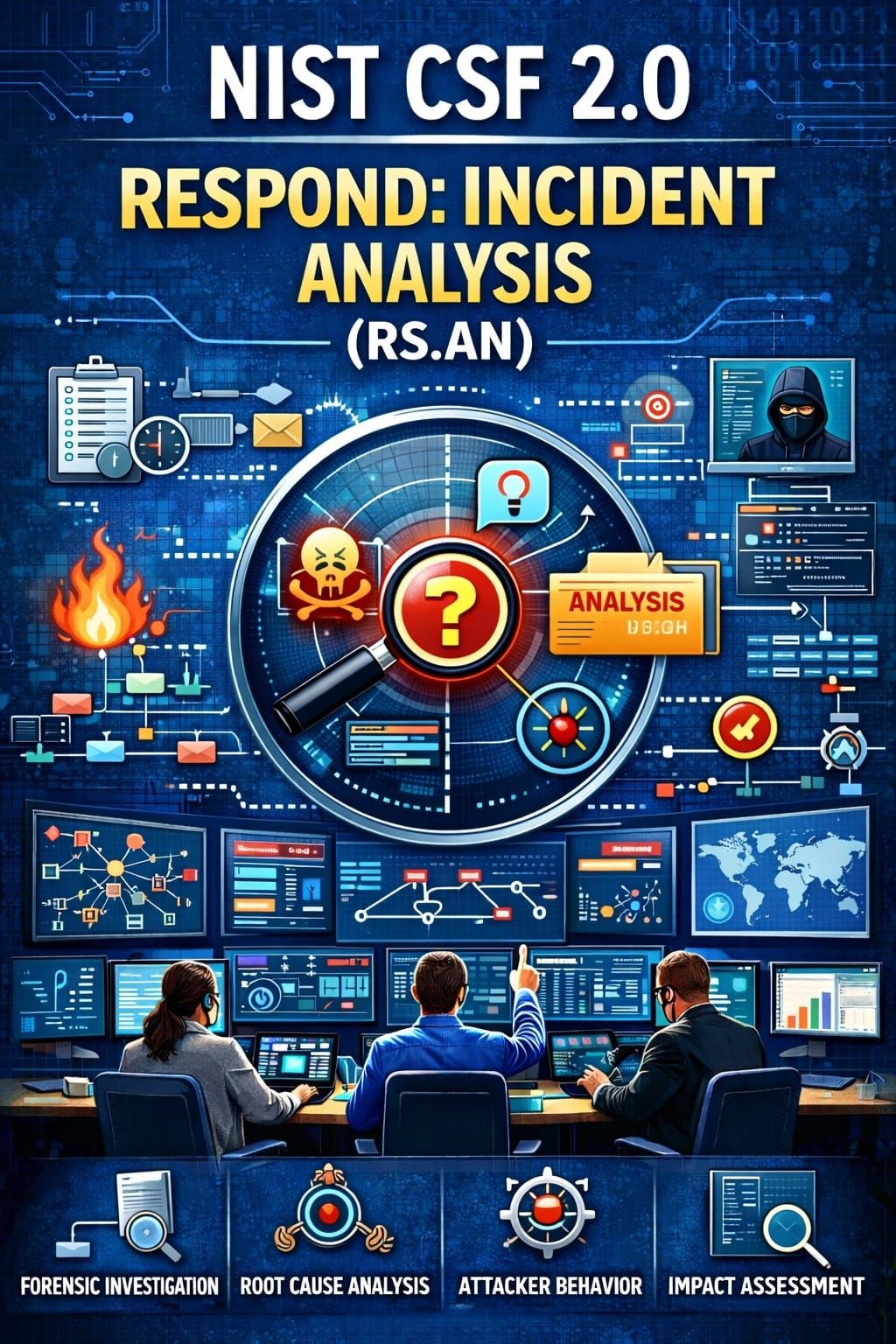
If Incident Management is about orchestrating the response, then Incident Analysis is about making sure you are responding to the right problem.
I’ve seen organizations execute incident response plans flawlessly—only to later discover they misunderstood what actually happened. They contained the wrong systems, preserved the wrong evidence, and briefed executives with incomplete narratives.
That is why NIST CSF 2.0 Respond – Incident Analysis (RS.AN) is a distinct and critical category. It exists to ensure that decisions made during response are grounded in accurate, evolving understanding of the incident.
What Is Incident Analysis (RS.AN) in NIST CSF 2.0?
RS.AN focuses on the organization’s ability to investigate and analyze cybersecurity incidents to understand cause, scope, impact, and attacker behavior.
Put simply, RS.AN answers:
“What actually happened, how did it happen, and what does it mean?”
Incident analysis builds on detection and adverse event analysis, but goes further by:
- Confirming root cause
- Determining the full blast radius
- Identifying attacker objectives and progression
- Validating containment and eradication decisions
Without strong analysis, response becomes guesswork.
Why Incident Analysis Matters to CISOs
From an executive perspective, incident analysis drives:
- Correct containment decisions
- Regulatory and legal accuracy
- Credible executive and board briefings
- Lasting security improvements
Poor analysis leads to:
- Incomplete containment
- Repeated incidents
- Incorrect disclosures
- Loss of trust with leadership and regulators
Analysis is what turns activity into understanding.
Core Objectives of RS.AN
A mature Incident Analysis capability ensures that:
- Incidents are fully understood, not just closed
- Root causes are identified and validated
- Scope and impact estimates improve over time
- Response actions are continuously adjusted based on evidence
This is a dynamic process, not a one-time task.
How to Implement RS.AN Effectively
1. Separate Analysis From Initial Triage
Early triage is about speed. Incident analysis is about accuracy.
RS.AN requires deliberate investigation focused on:
- Timeline reconstruction
- Evidence validation
- Hypothesis testing
- Peer review of conclusions
Aspiring CISOs should ensure analysts are given time and authority to analyze—not just react.
2. Preserve and Correlate Evidence Early
Analysis depends on evidence quality.
Organizations should ensure:
- Log retention is sufficient
- Forensic artifacts are preserved
- Cloud, identity, and endpoint data are correlated
- Chain-of-custody procedures exist when needed
You cannot analyze what you didn’t collect.
3. Understand Adversary Behavior and Intent
RS.AN is not just technical troubleshooting.
Effective programs:
- Map activity to attack techniques
- Assess attacker objectives
- Identify pivot points and missed detections
- Understand how the attacker entered, moved, and persisted
This prevents repeating the same failures.
4. Continuously Re-Assess Scope and Impact
One of the most common response failures is locking into an early conclusion.
Strong RS.AN practices include:
- Expanding scope checks proactively
- Re-validating containment effectiveness
- Updating executives as understanding evolves
- Adjusting response actions based on new findings
Analysis should evolve as the incident evolves.
5. Feed Analysis Directly Into Improvement
RS.AN findings must directly influence:
- Detection tuning
- Control gaps
- Architectural changes
- Training priorities
- Risk assessments
If analysis does not change the program, it is purely academic.
Metrics to Measure Incident Analysis Effectiveness
Operational Metrics
- Time to confirmed root cause
- Analysis backlog per incident
- Evidence completeness rate
- Analyst peer review frequency
Effectiveness Metrics
- Incidents with validated root causes
- Scope expansions after initial analysis
- Missed detection points identified
- Repeated incidents tied to known causes
Maturity Metrics
- % of incidents with formal analysis reports
- % of incidents with attacker TTP mapping
- Time between containment and full understanding
- Executive confidence ratings post-incident
Strong metrics emphasize confidence and correctness, not just speed.
Common RS.AN Pitfalls
These issues consistently weaken programs:
- Rushing analysis to “close” incidents
- Over-trusting automated conclusions
- Failing to reassess assumptions
- Not involving experienced analysts
- Treating analysis as post-incident only
Incident analysis should run in parallel with response, not after it.
Final Thoughts for Aspiring CISOs
Incident Analysis is where security programs mature.
It requires:
- Patience under pressure
- Intellectual honesty
- Willingness to challenge early conclusions
- Discipline to document uncomfortable truths
If Incident Management is about leadership, Incident Analysis is about judgment.
Master RS.AN, and you move from reacting to incidents to truly learning from them—which is the hallmark of resilient organizations.

Comments ()