
What Functions a Large Enterprise Security Organization Must Have — And Why
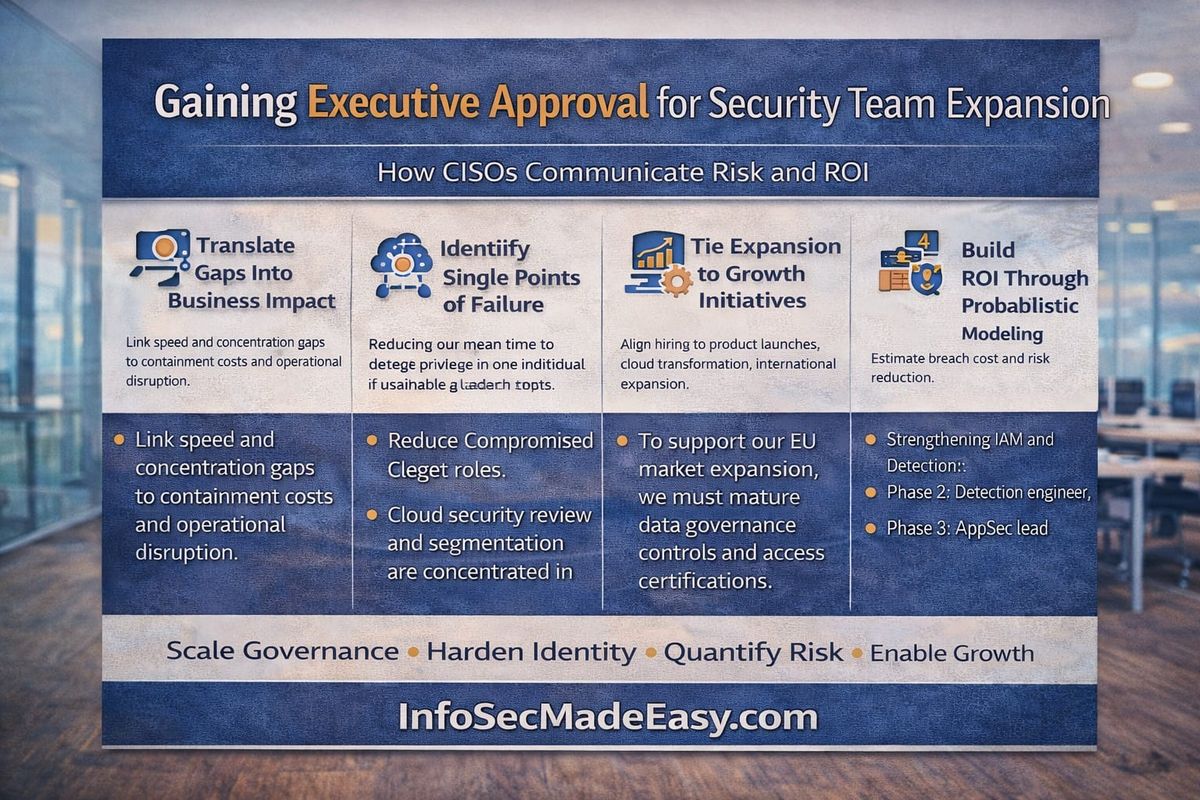
If you are operating in a large enterprise, you are not building security for coverage.
You are building it for:
Scale
Resilience
Regulatory defensibility
Revenue protection
Investor confidence
Brand preservation
At this stage, “having security tools” is irrelevant.
What matters is:
Clear functional ownership aligned to enterprise risk.
Let’s break down each major function, why it exists, what it does, and how to justify it.
1. Security Operations (SecOps)
Why This Function Exists
Because breaches are inevitable.
The question is not:
“Will we be attacked?”
It is:
“How fast can we detect and contain it?”
Large enterprises have:
Complex environments
Hybrid cloud
M&A integrations
Third-party access
Massive identity sprawl
Without engineered detection capability, breaches become long-dwell events.
Dwell time equals cost.
What This Function Actually Does
A mature SecOps team should:
Engineer detection rules (not just review alerts)
Perform threat hunting
Run incident response
Manage vulnerability remediation coordination
Validate security control effectiveness
Measure detection and containment times
They are not just “SOC analysts.”
They are risk compression engineers.
What Happens If You Don’t Mature SecOps
Alert fatigue
Delayed containment
Escalating breach cost
Board-level scrutiny after incidents
Loss of executive trust
Executive Language to Secure Buy-In
Instead of:
“We need more SOC analysts.”
Say:
“Our current detection engineering capacity is insufficient to proactively identify lateral movement and privilege escalation. Reducing our mean time to detect from 12 hours to under 4 hours materially reduces containment cost and operational disruption.”
Or:
“Each hour of dwell time increases breach impact. This investment compresses that timeline.”
Executives understand time compression as risk reduction.
2. Governance, Risk & Compliance (GRC)
Why This Function Exists
Because security must be measured.
Without GRC:
Risk is undefined
Tolerance is unclear
Reporting is reactive
Audit becomes painful
Regulatory exposure grows
GRC converts technical controls into business risk language.
What This Function Actually Does
A mature GRC function:
Maintains a cyber risk register
Maps controls to regulatory obligations
Tracks residual risk
Manages third-party risk
Aligns with enterprise risk management (ERM)
Prepares board-level reporting
They are not “policy writers.”
They are risk translators.
What Happens Without Strong GRC
Security operates in isolation
Leadership is surprised during audits
Board asks for clarity you can’t provide
Third-party risk blindsides operations
Executive Language to Secure Buy-In
Instead of:
“We need another compliance analyst.”
Say:
“Cyber risk is not currently quantified alongside financial and operational risks. Establishing formal risk governance ensures leadership understands exposure and tolerance thresholds.”
Or:
“This allows us to shift from reactive audit response to continuous risk management.”
Executives fund visibility.
3. Identity & Access Management (IAM)
Why This Function Exists
Identity is the attack surface.
Modern breaches typically begin with:
Credential theft
Privileged misuse
Identity misconfiguration
In large enterprises:
Users move roles frequently
Privileged accounts accumulate
Contractors increase access surface
Cloud identity expands rapidly
IAM is not just IT hygiene.
It is breach likelihood reduction.
What This Function Actually Does
A mature IAM function:
Automates joiner/mover/leaver processes
Implements privileged access management (PAM)
Conducts access certifications
Enforces MFA and conditional access
Aligns identity governance with zero trust principles
IAM teams prevent privilege creep.
What Happens Without Mature IAM
Privilege accumulation
Excess standing access
Ransomware blast radius expansion
Insider misuse risk
Audit failures
Executive Language to Secure Buy-In
Instead of:
“We need a PAM engineer.”
Say:
“Compromised credentials account for the majority of initial access in major breaches. Strengthening identity governance reduces breach likelihood more efficiently than expanding perimeter controls.”
Or:
“Identity controls are the most direct way to reduce ransomware blast radius.”
Executives respond to likelihood reduction and blast-radius language.
4. Architecture & Security Engineering
Why This Function Exists
Because prevention scales better than detection.
If security is not embedded into architecture:
Misconfigurations proliferate
Cloud sprawl increases exposure
Security becomes reactive
Architecture is how you stop vulnerability injection.
What This Function Actually Does
A mature architecture function:
Defines secure cloud reference architectures
Reviews infrastructure-as-code
Establishes segmentation strategies
Integrates security into DevOps
Designs zero trust implementation paths
They build secure foundations.
What Happens Without It
Detection burden increases
Remediation cost skyrockets
Cloud misconfigurations multiply
Security debt accumulates
Executive Language to Secure Buy-In
Instead of:
“We need a cloud security architect.”
Say:
“Embedding security controls into infrastructure design reduces remediation cost and accelerates secure transformation initiatives.”
Or:
“Engineering security upstream prevents downstream operational disruption.”
Executives fund efficiency gains.
5. Application & Product Security
Why This Function Exists
If your company builds software, vulnerabilities become revenue risk.
AppSec reduces vulnerability injection rate.
It is preventive engineering.
What This Function Actually Does
Integrates SAST/DAST into CI/CD
Conducts threat modeling
Runs bug bounty coordination
Establishes secure coding standards
Embeds security champions in development teams
They shift security left.
What Happens Without It
Production vulnerabilities
Public disclosures
Customer trust erosion
Expensive emergency remediation
Executive Language to Secure Buy-In
“We can either detect vulnerabilities after deployment or reduce injection before release. The latter is significantly more cost-efficient.”
Or:
“Secure development protects revenue-generating platforms.”
Link security directly to revenue.
Comments ()